Why Edmonton The tree-mendous benefits of forest bathing in Edmonton

The city’s river valley—the largest urban parkland in North America—is ideal for nature therapy.

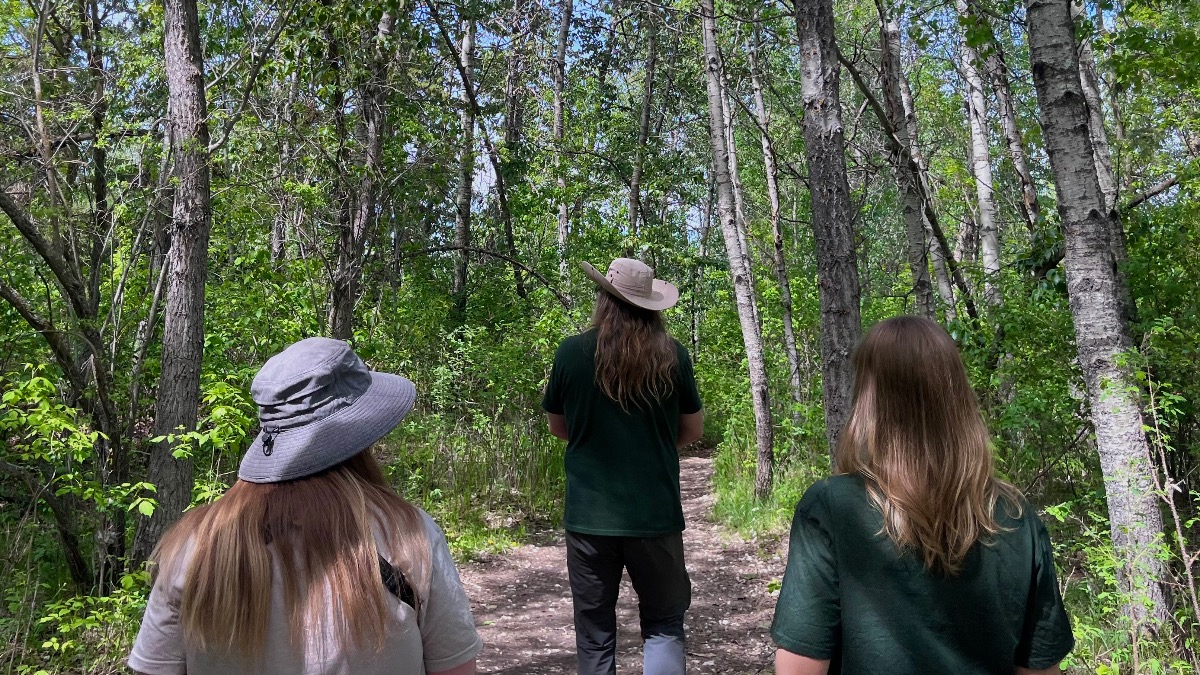
Allyn Esau stands on a dirt trail in a ravine next to Edmonton’s Whitemud Freeway. A creek gently trickles to the west, muffling the whoosh of the freeway traffic. A forest of conifers and poplars sways to the east. It’s a June afternoon. 

“It’s a bright, beautiful day,” she says. “There’s a lot of different colours. Try to see what stands out for you.” 

A group of women and men look around, slowly taking in the different hues in Whitemud Creek Ravine South—from the browns and greys of tree bark to the greens of grass, leaves and spruce needles.
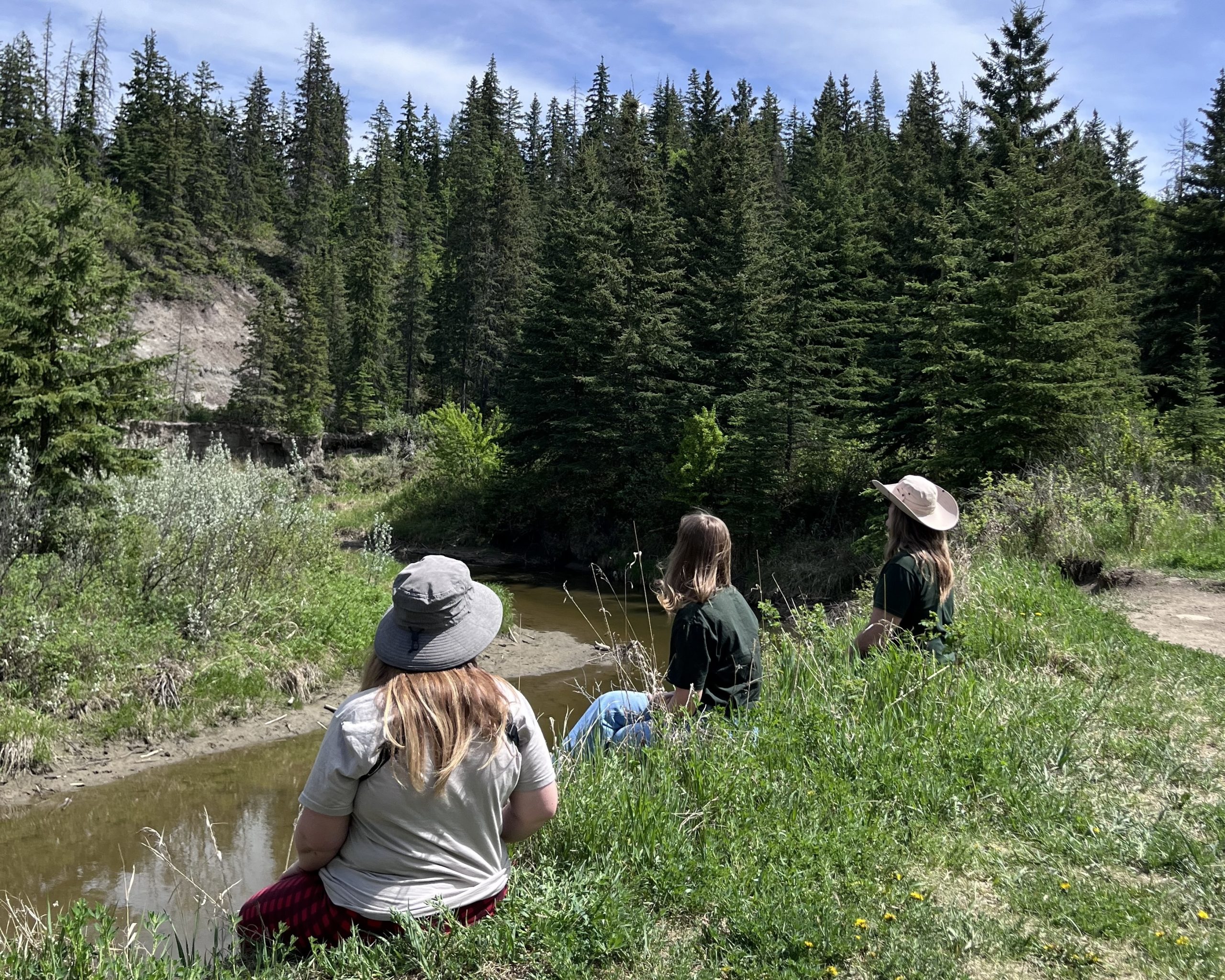
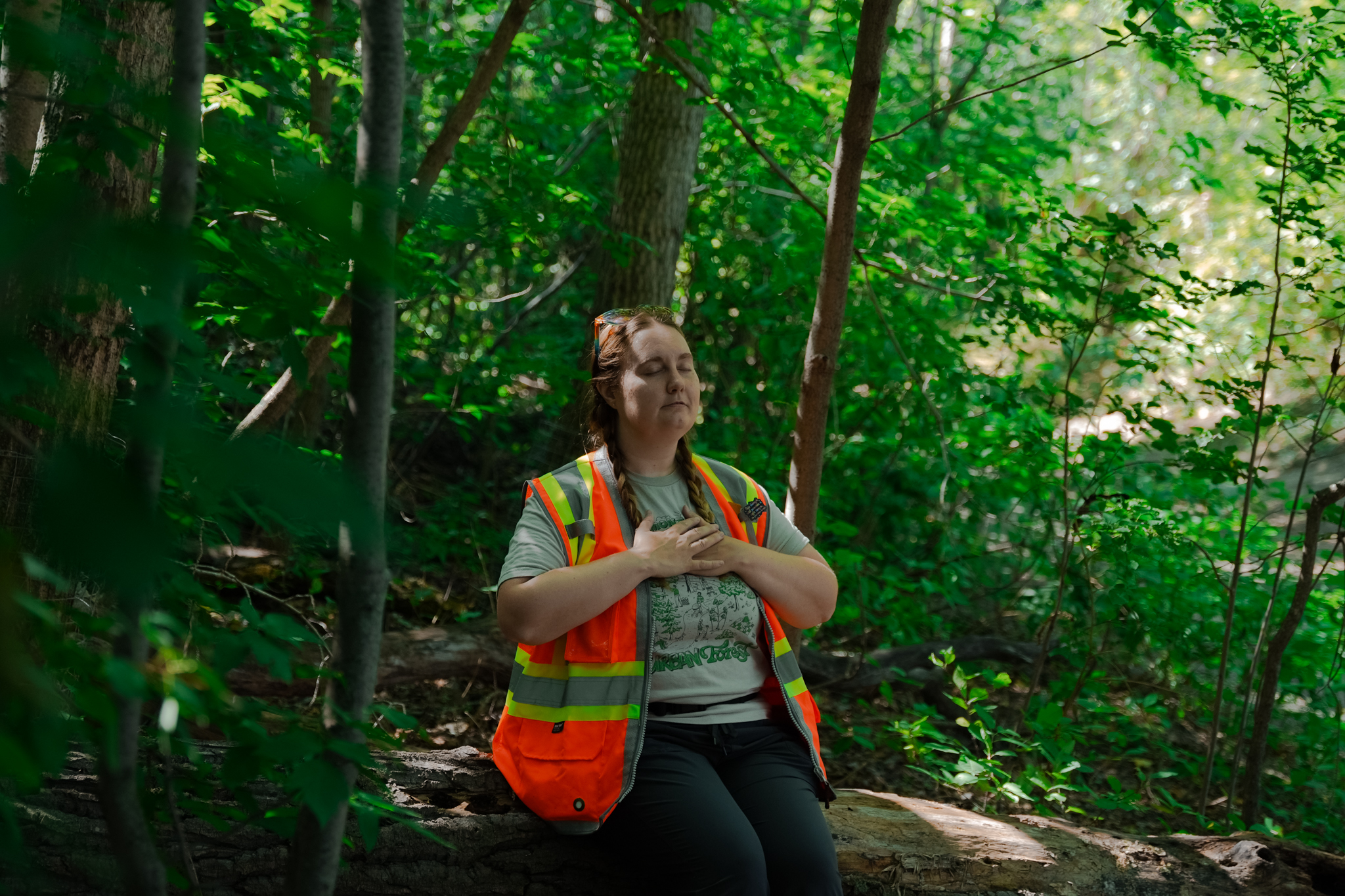
Esau is teaching the group about a Japanese practice known as forest bathing, or Shinrin- yoku. It’s more than just a quick stroll in the forest, it involves slowing down and fully immersing yourself in nature.

“There are measurable scientific benefits of participating in forest bathing,” says Esau, who is a certified Shinrin-yoku guide.

“For example, it lowers your blood pressure. That drop doesn’t just last for a couple of hours—it continues for up to a couple of weeks after you complete your time in the forest.”

Esau is part of the City of Edmonton’s Community Forestry team, which hosts free forest bathing sessions in several locations, including Whitemud Park, Capilano Park, Twin Brooks District & Nature Park and Northeast River Valley Park.

The team’s goal is to encourage more people to connect with the city’s urban forest. 

Edmonton is ideal for Shinrin-yoku. There’s an estimated 12.8 million trees in the city or about 10 for each Edmontonian.

Almost half of those trees live in the river valley—the largest urban parkland in North America—which spans 48 kilometres in length and includes dozens of parks, ravines, sanctuaries and 160 kilometres of interconnected trails. 


Aspens, balsam poplars and white birch trees are among the most common species in the river valley. So is the white spruce, a conifer, which is particularly vital for forest bathing.

Conifers release high concentrations of phytoncides, which are antimicrobial compounds that all trees produce to heal themselves.

As it turns out, phytoncides are good for humans, too. 

Research has shown that as we breathe in these compounds, we experience tangible physical benefits,” says Esau. “So, there’s the reduction in our blood pressure. There’s also a reduction in our heart rate.”

As Esau and her group of forest bathers slowly traverse Whitemud Park Ravine South,  she offers a series of “invitations” to help participants connect to nature during their two-hour session. 

First, she invites the group on a sensory walk. She asks everyone to focus on the colours of the forest. Sounds. Smells. Tastes. Feels.  

Later on, she invites forest bathers to shift their perspective of the forest—by sitting on a log (or even laying on the ground) and looking up at the sky. (Other invitations can include mindful breathing activities and a guided meditation.) 

“An invitation is just an opportunity to participate,” says Esau. “You can do whatever your personal interpretation of it is.” 

Throughout the session, Esau also talks about the history of Shinrin-yoku, shares details about the flora, fauna and foliage in the area, and answers questions. One first-time forest bather asks for tips for continuing the practice on her own. 

“You can go through the forest in your neighbourhood,” Esau replies.

“You can do it in any park or when you go camping or even when you’re walking down the boulevards and there’s just some scattered individual trees.

It’s about making a frequent and intentional practice about being in nature.”